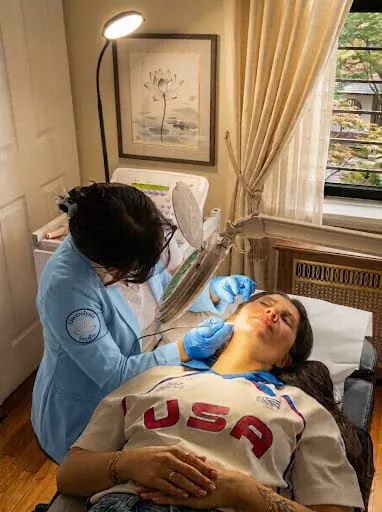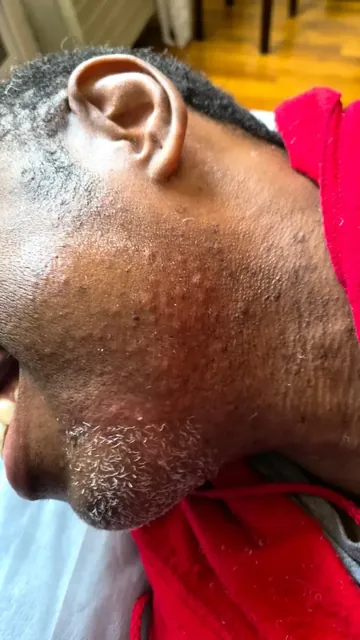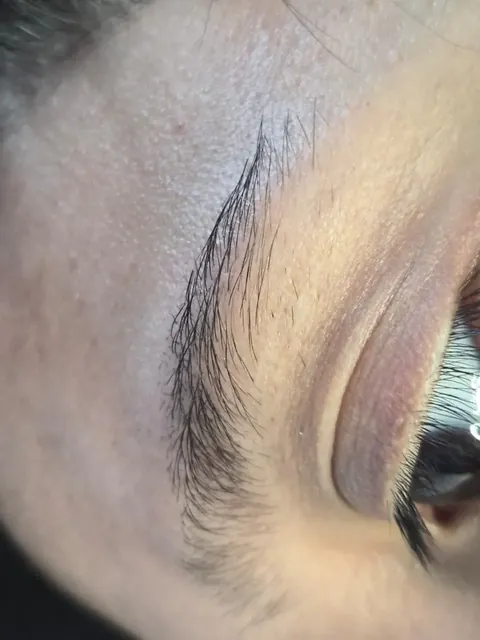
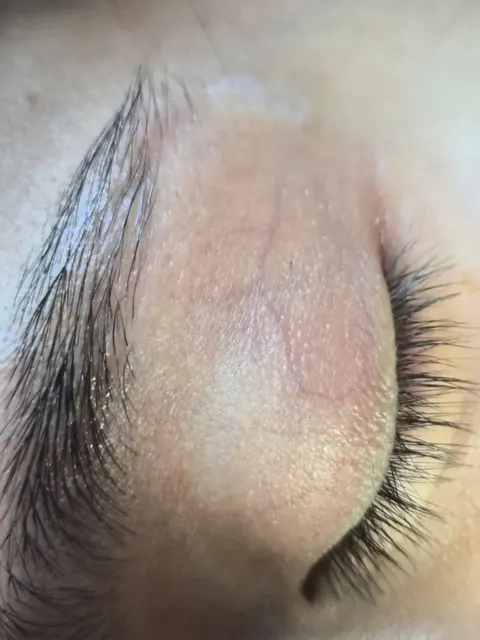
There is no single number of sessions that fits everyone. It depends on the area, how dense the hair is and what’s causing it. What I can tell you is why it takes a series of sessions, what changes the timeline, and what progress looks like along the way. At your free consultation, I give you an honest estimate for your case.
Why one session is never enough
Hair grows in cycles. At any moment, some of your follicles are in their active growth phase, some are resting and some are shedding. Electrolysis works best when the follicle is in its active phase, and not all follicles are there at the same time.
So in each session I treat the hairs that are visible and active. Over the following weeks, other follicles enter their growth phase and show up as new hairs. We treat those next. Session by session, there are fewer and fewer follicles left.
What changes the number of sessions
- Size of the area. Small areas like the upper lip or eyebrows usually need fewer sessions than the jawline, chin and neck, or the legs.
- Density. The more hairs per area, the more time it takes to treat them all.
- The cause. When hormones are involved, as with PCOS or menopause, new follicles can keep activating, so treatment takes longer.
- Your hair removal history. Years of tweezing or waxing can distort follicles and make them deeper or curved, which can take more passes.
- Thickness of the hair. Coarse, deep hairs sometimes need more than one treatment before the follicle is fully destroyed.
- Consistency. Keeping a regular schedule is what lets us catch each hair at the right moment.
How often are sessions?
At the beginning, sessions are usually weekly or every other week, because there are many active hairs. As the area clears, sessions get shorter and can be spaced further apart. Sessions are booked by time, so we adapt the length to how much there is to treat.
What progress looks like
Progress with electrolysis is gradual, and it’s easy to miss if you only look day to day. These are the signs that it’s working:
- Hairs take longer to grow back.
- The hairs that do grow are finer and lighter.
- The hair comes in patches instead of covering the whole area.
- Your sessions get shorter because there is less to treat.
“I notice that the hair takes longer to grow back and comes in much thinner and only in patches.”
Sergio Lopez, Google review
Taking a photo of the area every month helps you see the change. Many clients are surprised when they compare.
How to get results faster
- Keep your appointments. Skipping weeks lets hairs pass their active phase.
- Don’t tweeze or wax between sessions. It distorts the follicle and resets the clock.
- Follow the preparation I give you. How long to let the hair grow before each session depends on your hair and the area.
- Take care of your skin after each session. Keep the area clean and avoid makeup on it for the time I recommend.
Is it worth it?
Electrolysis asks for patience, but the result is permanent: once a follicle is properly treated, it doesn’t grow hair again. That means the time you invest now replaces years of shaving, tweezing or waxing.
The best way to know how many sessions you will need is to let me look at your skin and hair. The first consultation is free, and you will know your plan and the cost before we start.